In pain and no times showing? Call us early on the day on (07) 3217 7017. We try to keep an emergency appointment free each day. It isn’t shown online.
Emergency examination and dental x-ray — $60
Open: Mon & Thu 8:30am – 7:00pm · Tue 8:30am – 2:30pm · Wed 8:30am – 4:30pm · Fri 8:30am – 2:30pm (alternate Fridays only — please ring to check whether we are open this Friday)
If you can, call early in the day — that gives us the best chance of fitting you in before we close. Outside hours, our answering service can take your details and knows exactly which Fridays we’re open.
Dental pain has a way of arriving at the worst possible time. If you’re in pain right now, we aim to keep appointments available each day for people who need to be seen quickly.
Not every dental problem is an emergency, and it helps to know which is which.
Please call us straight away if you have:
Please go to a hospital emergency department or call 000 if you have:
These are signs an infection may be spreading, and they need medical attention rather than a dental appointment first.
It can usually wait a day or two if you have:
Even so — do ring us. It costs nothing to describe what’s happening, and we’d rather tell you it can wait than have you sit at home wondering.
A cracked tooth is a common reason people call us in pain, and one of the most frustrating to live with — because it often doesn’t look like anything is wrong.
The usual pattern is:
Back teeth — molars and premolars — take the most force when you chew, so they’re where cracks most often appear. A cracked molar frequently follows a large old filling, years of heavy grinding, or a single unlucky bite on something hard.
Why it’s worth having looked at early. A crack that only involves the enamel and dentine can often be managed relatively simply — sometimes by removing the old filling, assessing the crack under magnification, and protecting the tooth with a crown or onlay so it can no longer flex apart. If the crack extends into the nerve, root canal treatment may be needed as well. If it runs below the gum and splits the root, the tooth may not be restorable at all.
That progression is the reason we’d rather see a cracked tooth sooner than later. The earlier it’s assessed, the more options tend to remain open.
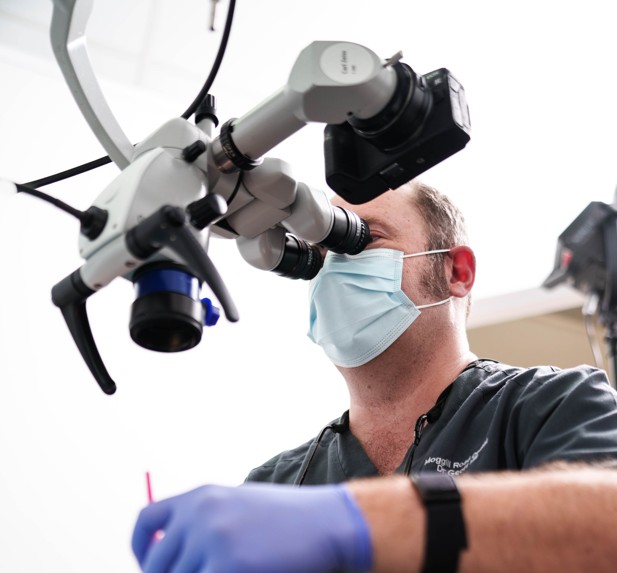
How we assess it. Dr Hill uses magnification and microscope-assisted techniques where appropriate, which can help identify fine cracks that aren’t visible to the naked eye or on an x-ray. Cracks are notoriously difficult to see on radiographs, which is why an examination matters.
If a piece has already broken off: keep the fragment if you can and bring it with you, avoid chewing on that side, and if the edge is sharp, a small piece of sugar-free chewing gum or dental wax pressed over it can protect your tongue and cheek until your appointment.
None of this fixes the underlying problem, but it can make the wait more bearable.
Please don’t hold an aspirin against the gum — it burns the tissue and doesn’t help the tooth. And avoid using clove oil heavily; a little is fine, but it irritates gum tissue and can make the examination harder.
Swelling is the symptom we most want to hear about early.
A dental abscess is a pocket of infection at the root of a tooth or in the gum beside it. It usually causes a deep, throbbing ache, a tooth that feels tender or “high” when you bite, and swelling of the gum or face. Sometimes there’s a small pimple-like lump on the gum, and sometimes a bad taste as it drains.
Two things worth knowing.
First — a lump on the gum isn’t a “pressure point.” People often assume the swelling is where two teeth are rubbing, or a spot that’s been irritated by food. Usually it’s the infection finding its way out through the bone. It needs treating at the source, not just rinsing.
Second — and this is the one that catches people out — pain stopping is not the same as the problem resolving. When a badly inflamed nerve finally dies, the pain often disappears completely. It feels like recovery. What has actually happened is that the tooth has stopped being able to signal, and the infection is now free to spread into the bone beneath it, quietly, sometimes for months.
If you’ve had severe toothache that suddenly settled on its own, please still have the tooth looked at.
Upper back teeth sit directly beneath the maxillary sinus, and when that sinus is inflamed the pressure can feel exactly like toothache. It’s a genuinely difficult distinction, and plenty of people arrive convinced a tooth is the problem when it isn’t.
A few signs that point toward sinus rather than tooth:
And signs that point back toward the tooth:
If it looks like sinus, we’re still happy to take a look — an examination and an x-ray can usually rule the tooth in or out, and it’s worth knowing for certain rather than treating the wrong thing. If it turns out to be sinus, we’ll tell you so and point you toward your GP or pharmacist.
We’ll listen to what’s been happening, examine the area, and take a dental x-ray. Digital radiographs are available to review straight away, so we can look at them together during your appointment.
Then we’ll explain what we’ve found, what your options are, and what each one would cost — before any treatment goes ahead. If there’s a way to make you comfortable today and plan the definitive treatment for another visit, we’ll offer that. Nobody is asked to make a large decision while they’re in pain.
Emergency examination and dental x-ray — $60.
This includes the consultation, one dental x-ray, a diagnosis and a discussion of your options. If more than one x-ray is needed to see the problem properly, we’ll tell you before we take it.
Treatment on the day is quoted separately, and always discussed with you first. As a guide, the most common emergency treatments fall in these ranges:
| Treatment | Typical range |
|---|---|
| Filling, including replacing a lost filling | from $190 |
| Emergency extirpation & temporary filling (pain relief, first stage of root canal treatment) | from $250 |
| Simple extraction | from $190 |
| Re-cementing a crown | from $190 |
Definitive treatment — completing root canal treatment, crowns, onlays or replacing a missing tooth — is planned and quoted at a separate appointment, once you’re comfortable and have had time to think.
A wider x-ray, at no extra cost to you if you’re eligible. In some cases it’s useful to see the whole jaw rather than one tooth — a panoramic x-ray (OPG). We can give you a referral to have this done separately, and if you hold a standard (green) Medicare card, this is usually rebated in full — most Australian residents have one, so it’s well worth asking us about at your appointment.
We accept all health funds with HICAPS on-the-spot claiming, and we’re a preferred provider for Bupa, nib, HCF and Teachers Union Health.
Our answering service is available outside opening hours — it can answer common questions, take your details, and tell you exactly when we’re next open (including which Fridays). We’ll get back to you as soon as we’re in. You can also book online at any time.
If you can’t wait — if there’s spreading facial swelling, difficulty swallowing or breathing, uncontrolled bleeding, or an injury from an accident — please go to your nearest hospital emergency department, or call 000.
The pain can, yes — but that often means the nerve inside the tooth has died rather than healed. The underlying infection usually continues. If a severe toothache has settled by itself, it’s still worth having the tooth assessed.
Partly because lying down increases blood pressure in the head, which raises pressure inside an already inflamed tooth. Partly because there’s nothing else competing for your attention. Propping yourself up on an extra pillow often takes the edge off.
Sudden sensitivity in a single tooth — particularly to cold, and particularly if it lingers — is often an early sign of a crack, a failing filling, or decay that has reached the nerve. Generalised sensitivity across many teeth is usually a different issue, such as gum recession or grinding.
Not necessarily. It depends how deep the crack runs and how much sound tooth is left. Some cracks are shallow enough to manage with a bonded restoration; others need full coverage to stop the tooth flexing. We’ll assess it under magnification and explain what we can see before recommending anything.
Yes. Many of the people we see in an emergency have never been to us before, and there’s no obligation to come back afterwards — though we’d be glad if you did.
No. We see people in this position constantly, and the reasons are almost always understandable ones. Our job is to sort out the problem in front of us, not to comment on how it got there.
Yes — HICAPS on-the-spot claiming for all funds, and we’re a preferred provider for Bupa, nib, HCF and Teachers Union Health.
Taringa Professional Centre, Suite 9 / 180 Moggill Road, Taringa QLD 4068 — street level, easy to reach from Indooroopilly, Toowong, St Lucia and the western suburbs.
Mon & Thu 8:30am – 7:00pm · Tue 8:30am – 2:30pm · Wed 8:30am – 4:30pm · Fri 8:30am – 2:30pm (alternate Fridays)
In pain and no times showing? Call us early on the day on (07) 3217 7017. We try to keep an emergency appointment free each day. It isn’t shown online.
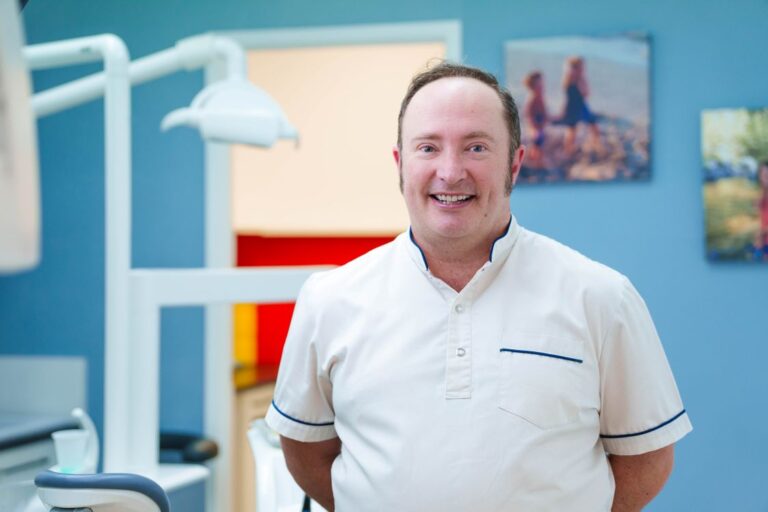
BDSc · M Clin Dent (Implantology) · FRACDS (Restorative)
Dr Hill owns and runs Moggill Road Dental in Taringa and is an experienced General Dentist. He has a particular interest in endodontics and implants. This includes molar root canal treatment and microscope-assisted techniques. He has been placing dental implants for over 15 years and can carry out both the surgical and restorative stages within the practice, working alongside specialists where a case calls for it.